Why "Pretty" Isn’t a Strategy - Defining Purpose in Retail and Hospitality
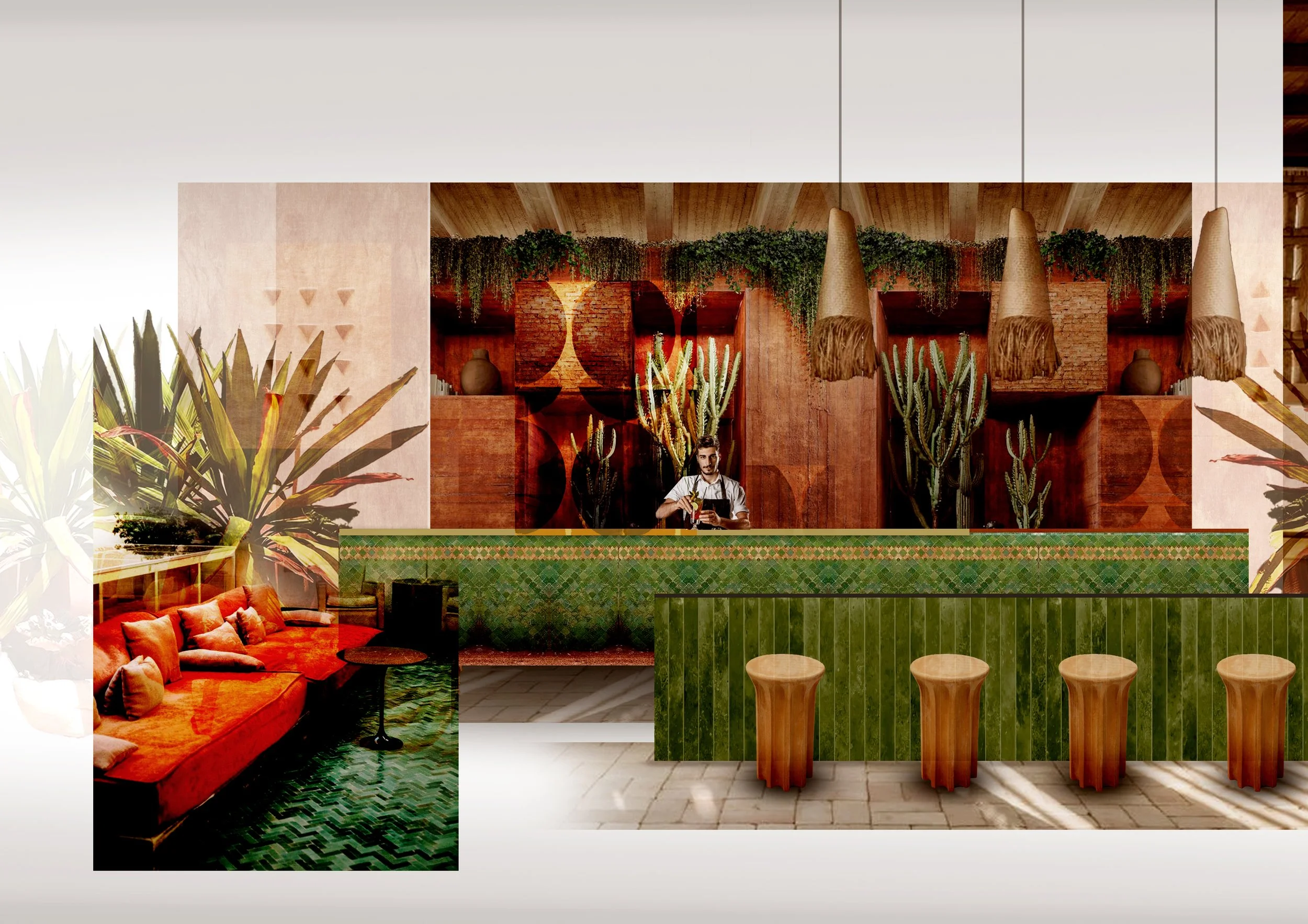
Concept Visual for Casa Coctel Bar and Restaurant Interior
In the world of interior design, we are often seduced by the "final shot." We scroll through ArchDaily or Dezeen, looking at perfectly lit monolithic marble counters and impeccably placed velvet chairs. But as a student or a Creative Director, you know the truth: a beautiful space that doesn’t work is just an expensive mistake.
The difference between a space that looks good and a space that is good lies in the very first step of the design process: Defining the Purpose.
The "Why" vs. The "What"
When we start a retail or hospitality project, the "what" is usually obvious. What is it? It’s a coffee shop. It’s a boutique. It’s a 50-room hotel.
But the "why" is deeper. The "why" is the reason the space exists in the first place. If you can’t articulate the purpose in one or two punchy sentences, your design will eventually drift. In hospitality, purpose is the bridge between Function (serving a meal) and Emotion (making a guest feel like they’ve finally come home).
Moving Beyond Lazy Adjectives
We’ve all seen the mood boards filled with words like "modern," "elevated," or "authentic." The problem? These words are hollow. They don't help you make a decision when you’re choosing between two different floor tiles at 6:00 PM on a Tuesday.
To build a meaningful concept, you need Action-Driven Purpose Statements.
Instead of saying you want to design a "relaxing spa," try: "This space is designed to physically decompress urban professionals by stripping away visual noise and using tactile, grounding materials."
Suddenly, the design path is clear. "Stripping away visual noise" tells you to hide the mechanical services and use handle-less cabinetry. "Tactile materials" tells you to prioritise how the stone feels underfoot over how it looks in a render.
Why This Matters for Retail and Hospitality
In commercial design, purpose is also a business tool.
In Retail: The purpose might be to "slow down the customer’s pace to encourage discovery." This leads to a winding layout rather than a grid.
In Hospitality: The purpose might be to "foster a sense of community for solo travellers." This leads to communal tables and "social" lighting levels rather than private booths.
When you define the purpose early, you aren't just decorating; you’re problem-solving. You’re giving the client a reason to trust your creative vision because it’s backed by logic, not just "vibes."
The Creative Director’s Litmus Test
For those leading teams, the Purpose Statement is your most powerful critique tool. When a designer brings you a material palette that looks stunning but feels too "loud" for a restorative hotel lobby, you don’t have to tell them you don’t like it. You simply point back to the Purpose.
"Does this high-gloss red acrylic help us 'physically decompress' the guest?" The answer is usually no, and the design stays on track without the ego getting bruised.
How to Start
Next time you open a blank CAD file or start a new Pinterest board, stop. Write down your Purpose Statement.
Identify the Function: What must the user do here? (Eat, shop, sleep, wait).
Identify the Emotion: How should they feel while doing it? (Empowered, safe, excited, calm).
Combine them: "The purpose of this space is to [Function] while making the user feel [Emotion] through [Design Strategy]."
Interior design isn’t just about how a space looks. It’s about how it makes people move, remember, and return. Start with the "why," and the "how" will follow.